Showing posts with label solar. Show all posts

Monday, 25 July 2022

On order...

GivEnergy AC 3.0 Inverter

We just placed an order (through Cawoods who are local to us[1]) for a GivEnergy 9.5KWh solar battery and 3KW inverter - demand is high at present, so it may not be fitted for a while, but....

Essentially it gives us 9.5KWh of storage at a charge/discharge rate of 3KW, and it's (if we ever want to) expandable with more batteries and more inverters. As we are on the Octopus Go tariff for our car, we are getting 4 hours of very cheap (7.5p/KWh) electricity with which to charge both the car and the battery, which we can then use over the course of the rest of the day and top up from the solar panels. We can link it to the solar panels so it knows what's being generated, and also to the car charger infrastructure.  
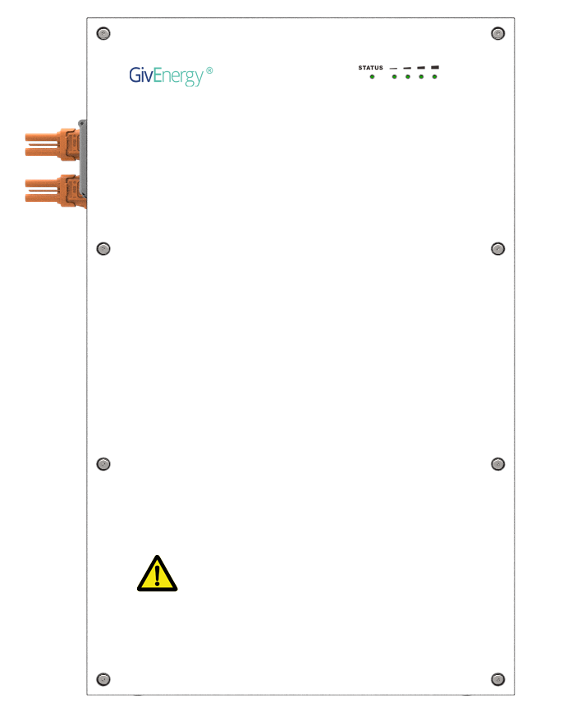
GivEnergy 9.5 battery
I suspect it will take a little exploration and fine-tuning to optimise things so we use as little peak rate (35p!!!!) power as possible, but barring days when the office heat pump (more on THAT later, I guess) is on, we should be able to offset most of our power consumption to the cheap night rate. 

More info as and when it's installed, and hopefully periodic updates after that as we tune the settings. My initial back-of-envelope maths (and a big spreadsheet) suggest we could potentially save £1000 a year at current (exorbitant) energy prices, which represents a pretty decent ROI.

To answer the obvious question, yes the battery can be used as a backup during power outages. 

[1] For those wondering why we didn't use Hereward Solar Solutions, who fitted our panels. the simple answer is the company quietly folded without notifying their customers in 2017. Caveat emptor, I guess. 

Tuesday, 5 April 2022

Back and greener

Zappi secured on our carport end
wall. Installation by Artisan Electrics
We've been sort of ticking along with the solar etc until late last year, when we bought an EV, specifically an 80KWh Skoda Enyaq, and as a result also had a myenergi Zappi charging point installed.

We've been considering an EV for a good while, but the major consideration has been that both sets of our parents are a) 100 miles away in opposite directions and b) not getting any younger, so we have been waiting on an EV that can do a round trip to either with charge to spare, and (in an ideal world) is made by Skoda, as we've both been driving Skodas for the past decade or more and we're fans. 

More detail in subsequent posts, but suffice it to say the car is a dream to drive, we've not had anything that could be described as range anxiety in 6 months (this does require a mindset change, of which more later), and the myenergi monitoring and control system is an absolute delight. 

Look out for more posts in the coming days.


Sunday, 21 April 2013

The Highs and Lows of a year of Solar

Yesterday (20th April 2013) we surpassed all expectations and managed the best solar day since we had them installed, so it got me wondering about which days were good and bad. Having done the maths, I thought I'd put a table up:

Month
 Expected       daily amount
Best day amount
Date
Worst day amount
Date

Mar-12
6.3
15.85
27/3
4.23
31/3
part month
Apr-12
8.7
16.05
1/4
1.21
29/4

May-12
9.8
18.75
25/5
1.73
1/5

Jun-12
9.8
16.95
19/6
2.21
11/6

Jul-12
10.0
18.56
23/7
4.17
13/7

Aug-12
9.1
16.10
9/8
4.63
15/8

Sep-12
7.5
15.59
7/9
0.86
24/9

Oct-12
5.5
12.09
6/10
0.73
23/10

Nov-12
3.4
8.61
11/11
0.03
21/11

Dec-12
2.0
6.86
2/12
0.07
14/12

Jan-13
2.9
7.45
27/1
0
14/1, 19/1-25/1
snow!
Feb-13
4.6
10.91
17/2
0.63
11/2

Mar-13
6.3
11.24
30/3
0.61
8/3

Apr-13
8.7
19.16
20/4
3.63
11/4
part month


And while we are at it, my last post did not account for the FIT payment so this is what we got from March 2012-March 2013 (about 5 days more than the year) = £609.50 total for 4 quarters for a total 2650 units generated. 

Saturday, 23 March 2013

The first year of Solar

We have today arrived at our solar panels' anniversary. so here are the figures:

2605.87 kWh (as read on the sunny beam yesterday) although Mike would like me to add half of the 22nd of this year as we got the meter turned on at lunchtime on 22nd last year! This makes the absolute total for the year 2607.14 kWh. Our meter for sending readings to the electricity board is only reading 2591 kWh, I am therefore going to round to 2600 anyway for all the rest of the calculations.

The original estimated generation figure given to us by Hereward Solar was 2190 kWh for the year so we have far surpassed that :) Mike then used an estimating site to generate some monthly amounts - he thinks it was the European Commission Joint Research Centre of the Institute for Environmental Sustainability, Renewable Energies Unit so we then plugged these into pvoutput.org and are using these to see if we are running to target.


Month
Estimate
Actual
Above or Below estimate
April ’12
261
255
below
May
305
328
above
June
295
301
above
July
311
336
above
August
284
326
above
September
226
278
above
October
171
181
above
November
101
104
above
December
63
75
above
January '13
89
68
below
February
129
123
below
March
195
93 in 2012
above total for both part months


116 in 2013
likely to be below for rest of March


Total
2430
2607


so we have surpassed their estimates as well :)

The more techie toys and monitoring ability Mike gets for me, the more OCD I get about looking at trends, and we started using pvoutput.org to graph our usage as well as our generation in December. So I worked out what we use as a baseline amount over the day. There is an interesting waggle approximately every hour which seems to be the freezer or fridge turning on and off, but basically our low point now is approx 150watts of always on stuff, most of which can be accounted for by the always-on server and hub, router, and WiFi points.

There is an interesting note from one of the points in the office which if you plug a 4-way with a light on it in and leave it on, it seems to use about 30 watts of electricity! - we have turned this off now.
I will put 2 graphs up for the hours from midnight to 6am to show this. The first is from 29/12/12 giving a total usage for 6 hours of 1.73kWh, with a low point of 189W and a high point of 490W:


and the second is from 23/03/13 giving a total usage for 6 hours of 1.46kWh with a low point of 153W and a high point of 450W:


so using a calculation of 1.5kWh for 6 hours, this makes 6kWh for 24 hours or the whole day, assuming we are not in and therefore no kettles, washing machines or televisions are being used.

Given a reasonable sunny day in March - well we did have ONE this year ;) - we can get levels above 400W from 8am till 5pm or 9 hours saving us 2.25kWh during daylight. If I can also arrange for washing machines and tumble driers to be matched up with the really sunny times then I can reasonably ensure free electricity for these items as well, but it does take guesswork and sometimes I am not so good at that, or the weatherman is not specific enough. Now a simple money note is that 1 watt always on is £1 per year and 1kWh costs 12.5p to buy so we were spending 75p per day on baseline or £275 per year, now we have saved 28p per day that it is sunny enough - say 300 days per year or £85 just on having sunshine. 

We appear to have used 3864 units of electricity in 1 year to today. and the year before we used 5708 so all our (my) OCD turning off of unnecessary power/lights etc PLUS the solar has saved us 1415 units or £177 assuming direct translation from units read on the meter into kWh charged on our bill. 

Saturday, 19 January 2013

Anne's end of year natter

This is my 3rd posting to this blog...

We have had our first zero day on our energy production since the solar panels went in. It is most likely due to the 4 inches of snow on the roof - which is not very photolucent!! (radiolucent is the X-ray equivalent word so I reckon that photolucent is the correct description)

However it has made me think about the year end figures so here they are:

2010 we used an average of 22 units per day electricity.
2011 we turned the very hungry computer off in April reducing our usage to approx 17 units per day saving 1200 kWh in the year.
2012 we put in our solar panels late March and reduced our average daily consumption of electricity to 12 units per day saving 1700 KWh in the year. 

This at a cost of 12ish pence per KWh makes a saving of £200.00 on our bills

We have also had 2 payments from the feed in tariff of £441.43 and £85.43 = £527.00 for 9 months of generation. If we assume that the jan-march payment will be approx £80 then our FIT payment for the year will be £600 and a saving of £200 on energy means that total saving approx £800.

At £8000 for the cost of the panels it will take 10 years to get our money back (not that we are in it for the money).

Our 'middle of the night' power usage runs at somewhere around 200-400watts depending on freezers and fridges doing their thing. so for 6 hours we use approx 1.8KWH. If our panels can generate at least 300 watts for 6 hours then our 'day when we are not in' power usage is covered by the panels. Even during the rainy weather in December we were getting about 200 watts generated, and averaged 2.5KWh per day although some days we generated between 0.5 and 0.8 KWH.

We have just bought a new power supply, case and UPS for our server as they lost all their magic smoke this week. The new system takes 30 watts more than the last one to run, but Mike is in the process of 'fixing' this. 

While we are at it I would like to rant about the gas calculations. 

If you look at our EON gas bill it says a number of items which you are then supposed to use to work out how much you need to pay. For example - a part gas bill went like this
previous
27637 estimated on 12/10/2012
Gas current
28273 read by you on 31/12/2012

Difference - 636 units - with multiplier value 1.0, conversion value of 1.02264, calorific value 38.8

Converted into - 7010 kWh (kilowatt / hour) used
Obviously you can all do the maths from this information can't you? It's so simple that a 12yr old with a calculator could do it!

NO it is not obvious! With the information in front of you there is no way of getting from 636 units to 7010 KWh. The essential "and then you divide by 3.6 for no apparent reason" is missing. It takes 3 levels of searching through the help file to find this missing figure. Presumably it is the conversion from watt-seconds to kilowatt-hours but why can they not put that in each gas bill in an obvious place. 

Friday, 6 April 2012

Is my house suitable for Solar PV?

There are, as I'm sure you've noticed, a lot of folks advertising solar PV at the moment, despite all the fun with Her Majesty's Government, the courts and the feed-in tariff (of which more in a later post). Setting aside for that later post the question of 'can we afford it?', this post looks at the practicalities of solar PV.

The ideal roof for solar PV is big enough to hold a 4kW system (about 30 sq m), slopes at a bit over 30º, faces due south, and has no shade. However, if you can't manage that, you're probably still OK. Provided you have a roof, or more than one in fact, with not over much shade, that faces at least a little bit south, you will be able to generate a reasonable amount of electricity. Surprisingly, all other things being equal, a roof facing east or west potentially generates 86% of the power of a south-facing roof.

There are a number of handy online sites that you can plug a postcode and a rough idea of your roof configuration into, and in return it'll spit out an equally rough idea of how many kWh you can expect to generate in a year. They're generally much of a muchness, since they all tend to use the SAP 2009 based calculations, which in a nutshell multiply the output rating of the panels by a factor that takes into account an element for facing, for angle of roof and for shade. If you have half a brain and a pocket calculator or a spreadsheet you can do it yourself, pretty much!

Consensus is that the independent estimator at PVGIS is better (SAP 2009 is apparently a bit pessimistic), but suppliers are, as I understand it, required to give you estimates of ROI based on SAP 2009. Of course, it's all entirely weather dependent, on top of that. This past week we've had a 16+ kWh day on April 1st, and a miserably wet day on the 4th that generated a stupendously uninspiring 1.24 kWh.

Most suppliers will be reasonably straight with you, although when we got our quotes we did find that the SAP 2009 factor varied from 690 to 820 for the same roof! It's worth plugging everyone's quotes for the power output of the system and the predicted annual generation in kWh into a spreadsheet and comparing them, just to see who might be over-egging the pudding a bit.

To summarise, though, as long as you have a decent roof that isn't entirely shaded by trees or next door, and faces at least a bit south, it's worth asking for a quote. Most if not all companies don't charge for quotes, and as long as you don't let them pull the wool over your eyes as regards ROI, you'll be fine. Of which, more next time.

Friday, 30 March 2012

Solar PV - the basics

As I mentioned in the original post, as well as solar water heating we also have (as of last week) solar electricity, or solar PV as it's more commonly known.

I thought I'd start out with a brief description of how a solar PV system goes together. First, a diagram!

A generic domestic solar PV system
Ok, So...

The two main components of the system are the PV cells themselves, and the inverter.

PV is short for "photo-voltaic' from the Greek photos, light, and Alessandro Volta, who invented the first battery - basically PV cells turn light into DC electricity, and the more light, the higher the voltage they generate.

Now, DC is not much use for running household equipment, as that requires 240V AC. Enter the inverter, whose job, pretty simply, is to turn DC into AC. This is where things get a little less simple, since inverters have a minimum voltage at which they will 'kick in', so if it's not bright enough to generate that minimum voltage? No electricity. Once it does kick in, the higher the voltage off the PV cells, the more power (and thus the more units of electricity) the inverter kicks out.

In our configuration[*], the inverter feeds into a spare breaker on our fuse box, via a meter that measures the total units of electricity generated (very important, as this is how you get your Feed-In Tariff, of which more in a later article). If there's more being generated than the house is using, then (by the magic of electricity) the excess is fed back to the grid, otherwise the grid supplies the balance.

And that's pretty much it. Other than to note that, if you were dreaming of being able to go 'off-grid' when the power goes out? Most systems don't, and more awkwardly, they actually shut down when the power goes off. Annoying and somewhat paradoxical - the reason behind it is that in order not to cause disruption to the grid, it's essential that the inverter syncs up to the frequency of the grid supply, and it's a requirement that if the grid goes off, it shuts down until it comes back.

Next in this series of posts, I'll look at how to calculate what kind of power you can get from a PV system.

[*] In some systems, the inverter is connected up in the meter cabinet instead of to the fuse box: this makes little or no difference to how things work.

Monday, 26 March 2012

Why monitor?

It may seem an obvious question, I know. And I'd be the first to admit that having devices I can interrogate remotely appeals to my inner geek, as does making stuff that isn't supposed to talk to anything but a closed-source, badly-written Windows app or a proprietary web service bend to my will. I'll freely confess that I'm a gadget freak, and that generating our own hot water and electricity is just cool.

But this isn't just about being geeky: it's about knowing what's happening in your system. For example, since having the solar water heating, I'd bet that we've saved nearly as much through being aware of what hot water we have and how long it takes to heat, as we have by generating it ourselves.

Equally, since I got the clamp sensor installed and talking to the computer, all of us at the Mill House have been very aware of saving energy - if you know that (for example) your house with most of its 'always on' stuff (fridge, freezer, server, etc) ticks over at 380W, then if you see a reading of 700W you'll start to investigate what's causing it. At some point I will let Anne post a breakdown of last year's energy savings here, but for now I'd just note that our electricity usage dropped by around 30% over 2011, just through knowing what we were using. (And, I should add before Anne does, through finally shutting down two Linux servers with very old power supplies. Old power supplies become very energy inefficient (several hundred Watts worth), which is why our house server is now a 60W miniITX box from the good folks at LinITX.com along with a similarly rated HP Media Server as a fileserver.)

But of course, that's just the first step. Sure, you can install your solar PV and sit back and watch the Feed-In Tariff money roll in on sunny days. But shouldn't you be using all that green electricity? As an example, our dryer is now on a timer (and once I get it set up, it'll be on a computer controlled switch, in fact) that only lets it run at times when the PV is likely to be generating most if not all of the power. (And sure, yes, we could hang it out in the garden. But both of us work, so being in to remove it when it rains isn't so easy...!)

Given the tightness of everyone's budgets generally, let alone the current move towards being at the very least energy efficient, and ideally as green as possible, I personally think it's vital to know both where your energy is coming from, and what's using it, long before the bill turns up. And setting things up to do so doesn't cost that much.


Solar water cost and ROI

Our panels (a pair of evacuated tube panels) set us back of the order of £9000 in (if I remember correctly) 2004. With hindsight, I think we did this too early - the price of a similar system has now dropped considerably (more like £2500-5000, apparently). We're probably saving £50-80 a year, so the ROI time is... a while yet.

On which topic, it's worth noting that our suppliers went out of business, and were taken to court indirectly over their rather inflated ROI claims, and we did get £4000 back as a result. We're currently using the local Peterborough Boiler Services to maintain our system (not that it needs much!), and are pretty happy with them.

It's also worth noting that there are two government incentive payments for solar hot water, one of which is available now, one to come. The one available now is the Renewable Heat Premium Payment, which is (or pretty much was since the deadline is March 31st) a scheme which pays £300 for any solar water heating install since Aug 1st 2011. The future one is the Renewable Heat Incentive - basically, if you've installed since 15th July 2009 (bother!), you will be eligible for some form of payment similar to the solar PV Feed-In Tariff.

As I said, with hindsight, we should probably have left it a couple of years: I'll get some stats upon a subsequent post for the last few years' gas bills, so you can see how much we've saved. Either that or I'll give Anne posting rights on this blog, and she can!

Our solar water heating system

Our solar water heating consists of a couple of panels on the roof of our outbuildings. They show up very clearly in the Google Maps aerial view, although (as of this post) the Maps view is out of date, as we had them moved in 2010 one 'bay' of the roof closer to the house.

The control unit is mounted on our inner landing next to the airing cupboard. Very usefully, it comes with three temperature sensors, one monitoring the temperature of the panels, the other a pair that measure the temperature at the top and bottom of the hot water tank. Essentially, how it works is that if the temperature of the panels is greater than the bottom of the tank (and less than 60ºC), water is pumped round the panels, heating it up. [The astute will note that this uses electricity. The really astute will note that this uses electricity when the sun is out, and we (as mentioned) have solar PV for that!]

Since we've had it installed, we pretty much don't pay for hot water between mid-March and late October, as the solar heating is generally enough to maintain enough of the tank at 40ºC or better for baths, showers and washing up. Sadly, it's not possible to buy a hot-fill washing machine any more, though, so ours does heat water itself for laundry.

I'd go so far as to suggest that even if you don't get solar water heating installed, sticking a pair of contact temperature sensors on the top and bottom of your hot water tank that you can monitor is incredibly educational. Apart from anything else, it cures you completely of setting the central heating timer to heat your water twice a day for an hour, since:
  1. we certainly don't use that much hot water in a day
  2. the boiler will heat the top of the tank to 60ºC in about 20 minutes flat (and remember, the top of the tank is where you take water from!)
Sadly, our controller doesn't talk to a PC, so as of yet we don't graph the temperatures or track if the pump is running. As ever, however, watch this space, as I have plans.